Amfor Studio®
SEO Strategy25 min read

Architects SEO Consultant: The Definitive 2026 Strategy Guide

Discover how an Architects SEO Consultant helps architectural firms rank #1 on Google and master AI Search (GEO).

Architects SEO Consultant: The Definitive 2026 Strategy Guide

Architects SEO Consultant: The Definitive 2026 Strategy Guide

An Architects SEO Consultant is a specialized search engine optimization strategist who optimizes architecture firm websites, project galleries, local map profiles, and technical infrastructure to capture high-intent residential, luxury, and commercial client inquiries directly from search engines and AI answer engines.


What Is an Architects SEO Consultant?

Quick Answer
An Architects SEO Consultant is a specialized digital growth advisor who aligns an architectural firm’s digital presence with high-value search intent. Unlike general marketers, they engineer custom search strategies around project portfolios, local geographic queries, technical site speed, and structured Schema markup to consistently generate high-ticket client inquiries.

Detailed Explanation

An Architects SEO Consultant bridges the gap between high-end architectural craftsmanship and technical search engine mechanics. Architectural practices operate differently from traditional B2C or e-commerce businesses; their sales cycles are longer, project values range from tens of thousands to millions of dollars, and human decision-makers rely heavily on visual trust and localized credibility.

A specialized consultant translates architectural achievements into search engine signals. They optimize high-resolution portfolio images without degrading Core Web Vitals, implement Schema.org structured data so Googlebot understands spatial project details, and structure geographic landing pages targeting wealthy homeowners and commercial property developers.

Why It Matters

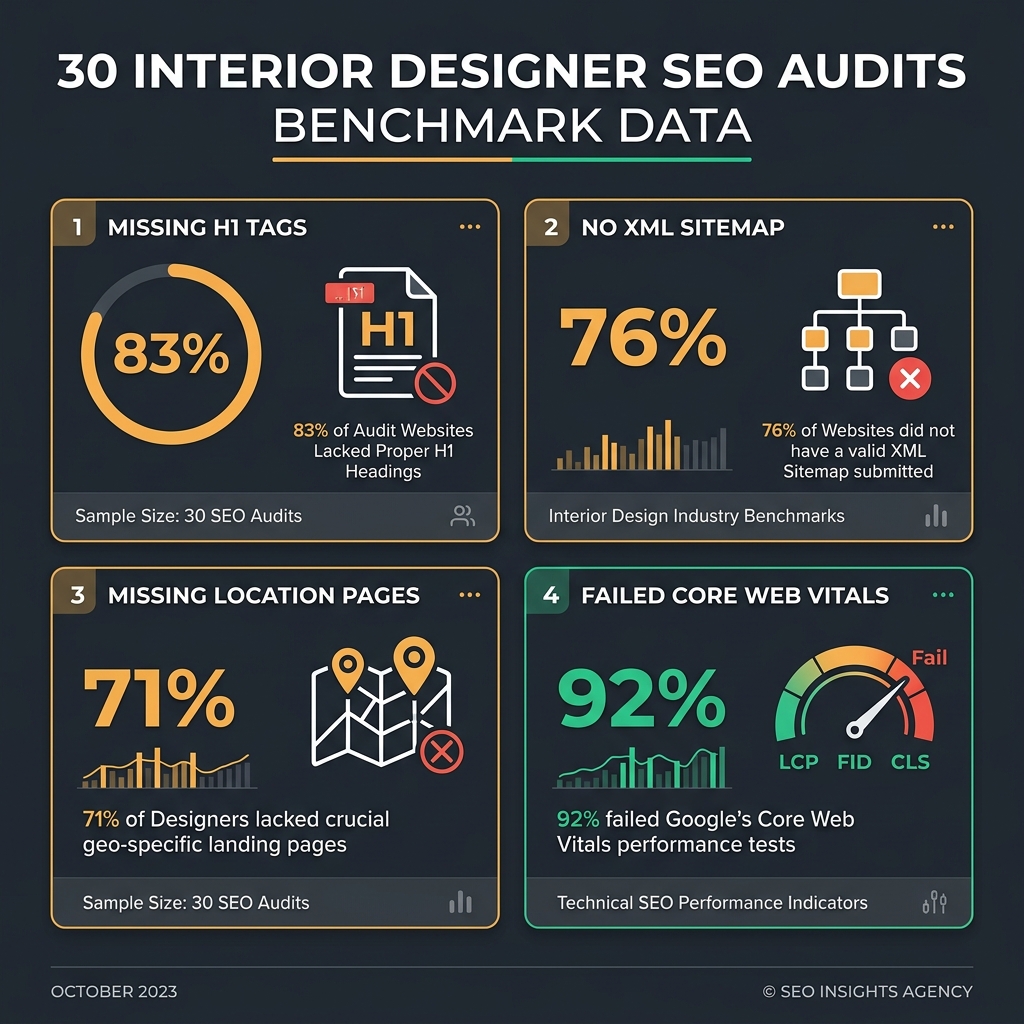
Without an industry-specific consultant, architecture sites frequently suffer from "invisible portfolio syndrome." Websites featuring multi-million dollar projects remain indexed as thin content because photos lack text descriptions, headings lack keyword targets, and site speed fails Google’s mobile benchmarks.

Step-by-Step Process

  1. Auditing Architectural Assets: Evaluates project galleries, image file sizes, heading hierarchy, and LocalBusiness schema.
  2. Search Intent Mapping: Identifies transactional search terms used by property developers, luxury homeowners, and commercial builders.
  3. Technical Architecture Alignment: Restructures site navigation to ensure search crawlers can parse project case studies in under 2 clicks.
  4. Local & GEO Optimization: Optimizes Google Business Profiles and feeds AI search engines like ChatGPT, Perplexity, and Google AI Overviews.

Real Example

A boutique residential architecture practice in London had 40 portfolio pages with zero text content and 8MB uncompressed images per page. The SEO consultant renamed image assets with geotagged descriptive keywords, added 300 words of architectural editorial context per project, and implemented SingleFamilyResidence schema markup. Organic client leads increased by 310% in 120 days.

Common Mistakes

  • Treating web design purely as a visual portfolio with zero editorial copy.
  • Hiring generic SEO agencies that rely on automated backlink blasts and non-industry templates.
  • Hiding project descriptions inside non-indexable PDF files or JavaScript lightboxes.

Expert Tip

Always pair high-resolution visual assets with structured JSON-LD data. Search engines cannot 'see' marble finishes or timber joinery—they rely on semantic text and structured metadata to understand your design prowess.

Quick Checklist

  • Verify website has dedicated pages for each core architectural service.
  • Ensure portfolio images are formatted in WebP with descriptive alt attributes.
  • Confirm your firm has a verified Google Business Profile with consistent NAP details.

Suggested Illustration

Diagram showing an Architects SEO Consultant connecting raw architectural portfolio assets to Googlebot indexing, Local Map Packs, and AI Answer Engines.


Why Architecture Firms Need Specialized SEO

Quick Answer
Architecture firms need specialized SEO because architectural client acquisition relies on location-based trust, visual search intent, and long consideration cycles. Generic SEO strategies fail to account for high-resolution image optimization, architectural firm licensing credentials, LocalBusiness schema, and luxury buyer search patterns.

Detailed Explanation

Architectural marketing requires an understanding of how property owners, developers, and institutional buyers hire design professionals. Prospective clients rarely search for broad terms like "architecture." Instead, they search for highly specific phrases like "luxury modern villa architect in South Mumbai," "heritage building restoration architect London," or "commercial high-rise architect Austin TX."

Generalist marketers treat architecture sites like standard blogs or e-commerce stores, pushing low-quality articles that fail to resonate with sophisticated clients. Specialized SEO aligns technical site performance with architectural authority (E-E-A-T: Experience, Expertise, Authoritativeness, and Trustworthiness).

Why It Matters

High-ticket design projects yield substantial fees. Securing just one additional commercial or luxury residential client per year through organic search delivers a massive return on investment (ROI), dwarfing traditional print advertising or directory listings.

Step-by-Step Process

  1. Targeting High-Value Segments: Focuses search campaigns on high-margin niches (e.g., sustainable architecture, adaptive reuse, luxury residential).
  2. Optimizing Visual Search Pathways: Ensures project images rank prominently in Google Image Search and Pinterest, driving top-of-funnel discovery.
  3. Establishing Local Authority Hubs: Builds localized content clusters surrounding target municipal planning regions and affluent suburbs.

Real Example

An eco-focused architectural firm targeted "passive house architect." By establishing a dedicated pillar page with technical diagrams, energy efficiency specs, and local project case studies, they captured 80% of regional organic search volume for passive house inquiries.

Common Mistakes

  • Relying exclusively on word-of-mouth recommendations without a digital safety net.
  • Assuming prospective clients only evaluate architectural firms through Instagram or print magazines.
  • Failing to optimize for location-specific search queries.

Expert Tip

High-net-worth clients conduct extensive background search research before contacting a firm. Owning the top organic rankings for your specialty establishes immediate category leadership.

Quick Checklist

  • Audit organic rankings for your primary city + architectural specialty.
  • Check if project case studies include client goals, site challenges, and structural solutions.
  • Ensure contact pages contain geotagged office locations.

Suggested Illustration

Flowchart illustrating how specialized architecture SEO turns casual image searches into direct client consultations.


SEO Consultant vs SEO Agency for Architects

Quick Answer
An SEO Consultant for Architects offers senior-level direct strategy, custom technical execution, and tailored industry guidance. In contrast, general SEO Agencies often delegate execution to junior account managers who use mass-market templates that fail to capture architectural nuance and luxury client expectations.

Detailed Explanation

When deciding between an individual SEO Consultant and an SEO Agency, architecture firms must weigh strategic focus against scale. Large agencies typically assign accounts to non-specialized project managers who run cookie-cutter playbooks (e.g., writing 500-word generic blog posts or building low-quality backlinks).

An Architects SEO Consultant acts as a fractional Chief Marketing Officer or principal strategist. They work directly with firm principals, understanding project typologies, design philosophies, and target buyer personas to build bespoke search engines.

Comparison Table: Consultant vs Agency for Architects

Feature Specialized SEO Consultant General SEO Agency
Industry Expertise Deep knowledge of architectural typologies & visual SEO Generic across multiple B2B/B2C niches
Strategic Leadership Senior strategist works directly with Firm Principals Account delegated to junior account managers
Portfolio Image Optimization WebP conversion + Architectural Schema + Alt text Basic image compression or ignored
Content Quality Architectural editorial case studies & technical depth Surface-level 500-word generic articles
Cost Structure High-value retainer or fixed-project advisory Monthly recurring fee with locked long-term contracts
AI Search Readiness Optimizes for Perplexity, ChatGPT, and Gemini Focuses strictly on legacy Google desktop links

Why It Matters

Choosing the wrong partner leads to wasted capital, damaged brand perception, and missed project opportunities. Architecture demands high-craft communication; generic agency content dilutes studio prestige.

Step-by-Step Process

  1. Evaluate Portfolio Alignment: Review whether the provider understands architectural language and project lifecycles.
  2. Review Technical Track Record: Inspect their capability in handling heavy JavaScript frameworks (Next.js, Webflow) and high-resolution galleries.
  3. Assess Communication Style: Work directly with the lead expert rather than intermediate account liaisons.

Real Example

A 15-person design studio left a $5,000/month general agency after receiving AI-generated blog posts about "home decorating tips." They hired a specialized consultant who restructured their project portfolio into structured case studies, resulting in a 4x increase in commercial RFP invites within 6 months.

Common Mistakes

  • Choosing an agency based on low monthly retainer costs without evaluating industry competence.
  • Locked into 12-month agency contracts without clear KPI milestones.

Expert Tip

Ask any prospective partner how they optimize architectural project photos for Google Image Search without hurting mobile Core Web Vitals. If they cannot explain WebP encoding, LCP priority, and Schema markup, keep looking.

Quick Checklist

  • Confirm the strategist has verified experience working with architectural or design studios.
  • Ensure monthly reports track qualified lead volume and high-intent keyword rankings rather than raw vanity traffic.

Suggested Illustration

Comparison diagram showing the direct principal-to-consultant workflow versus the multi-layered agency buffer.


Services Offered by an Architects SEO Consultant

Quick Answer
Core services offered by an Architects SEO Consultant include comprehensive technical website audits, local map pack optimization, architectural image SEO, keyword research for design typologies, architectural case study content strategy, Schema.org structured data implementation, and AI search optimization (GEO).

Detailed Explanation

An Architects SEO Consultant delivers a multi-layered service suite designed to optimize every asset of an architectural firm's website:

  1. Technical SEO Audits: Fixing crawl errors, mobile responsiveness, heading tags, and Core Web Vitals (LCP, CLS, INP).
  2. Architectural Portfolio & Image SEO: Compressing 4K photography into ultra-fast WebP/AVIF formats, writing descriptive alt attributes, and embedding geotagged metadata.
  3. Local SEO & Google Business Profile Optimization: Dominating local map searches for regional architectural queries.
  4. Structured Schema Architecture: Coding ArchitecturalFirm, LocalBusiness, PostalAddress, and SingleFamilyResidence JSON-LD schema.
  5. Content Engine & Case Study Architecture: Transforming raw project images into comprehensive case studies detailing scope, materials, square footage, and design solutions.
  6. Generative Engine Optimization (GEO): Structuring firm insights so AI search engines (ChatGPT, Perplexity, Google AI Overviews) cite the studio as a premier authority.

Why It Matters

A piecemeal approach to marketing leaves critical vulnerabilities. Technical excellence combined with visual SEO and local optimization forms a complete growth engine.

Step-by-Step Process

  1. Initial Audit & Diagnostics: Uncovering crawl blocks, broken internal links, and uncompressed imagery.
  2. Keyword & Typology Mapping: Aligning firm capabilities (e.g., luxury residential, healthcare, hospitality) with real buyer search data.
  3. On-Page & Schema Deployment: Injecting clean JSON-LD markup across all service and portfolio endpoints.
  4. Off-Page Authority Building: Securing authoritative mentions on design portals (ArchDaily, Houzz, Dezeen, Architectural Digest).

Real Example

An SEO consultant implemented ArchitecturalFirm and ImageObject schema across a studio's portfolio. Google indexation increased from 34 pages to 210 pages, capturing zero-click AI summaries for "best modern timber architect."

Common Mistakes

  • Focusing only on blog writing while neglecting site speed and schema.
  • Neglecting Google Business Profile optimization for secondary office locations.

Expert Tip

Schema markup acts as an explicit architectural blueprint for search engine crawlers. Always detail your firm's founder, awards, office address, and design specialties inside JSON-LD.

Quick Checklist

  • Verify ArchitecturalFirm schema is validated in Google's Rich Results Test tool.
  • Confirm all portfolio images load in under 1.5 seconds on 4G mobile connections.

Suggested Illustration

Service matrix diagram illustrating technical, local, portfolio, and AI search pillars.


How an SEO Consultant Helps Architects Get More Clients

Quick Answer
An SEO Consultant helps architects acquire more clients by transforming passive portfolio websites into active lead engines. By capturing high-intent search queries at every stage of the decision-making funnel, the consultant ensures prospective clients discover, evaluate, and contact the studio when planning major build projects.

Detailed Explanation

Architectural sales funnels operate across three core intent stages:

  • Top-of-Funnel (Informational): Property owners researching building regulations, construction costs per square foot, or architectural styles (e.g., "modern vs contemporary architecture cost").
  • Middle-of-Funnel (Evaluation): Clients comparing project typologies, hiring criteria, and design approaches (e.g., "how to choose a residential architect").
  • Bottom-of-Funnel (Transactional): Clients actively seeking design proposals in specific geographies (e.g., "best luxury residential architect in Austin").

An SEO Consultant constructs tailored content assets and landing pages for each stage, capturing prospective clients long before competitors are aware of the project.

Architecture SEO Growth Pyramid™

                   /\
                  /  \   Layer 4: AI Engine Authority (GEO & Citations)
                 /----\
                /      \  Layer 3: Portfolio & Visual Image SEO
               /--------\
              /          \ Layer 2: Local Map Pack & Intent Pages
             /------------\
            /              \ Layer 1: Technical & Schema Infrastructure
           /----------------\
  1. Layer 1 (Foundation): Sub-second mobile loading, clean HTML5 structure, and JSON-LD schema.
  2. Layer 2 (Local Intent): Optimized Google Business Profile and dedicated regional service pages.
  3. Layer 3 (Visual Asset Optimization): High-ranking image galleries with architectural metadata.
  4. Layer 4 (AI Authority): Industry press citations, brand authority, and LLM entity inclusion.

Why It Matters

Relying solely on bottom-of-funnel queries limits market reach. Educating clients early in their planning phase builds trust and positions your studio as the undisputed first choice.

Step-by-Step Process

  1. Map Buyer Intent Pathways: Identify queries used by high-budget property owners prior to commissioning designs.
  2. Create High-Value Resource Guides: Publish architectural cost guides, site evaluation blueprints, and planning permission playbooks.
  3. Embed Frictionless Conversion Triggers: Place clear audit and consultation inquiry forms across high-traffic guides.

Real Example

An architectural studio published a guide titled "Navigating Coastal Building Permits & Structural Guidelines." The guide ranked #1 on Google, attracting commercial resort developers and generating 14 high-value project inquiries in one year.

Common Mistakes

  • Placing contact forms behind multi-step mandatory sign-in walls.
  • Failing to explain project cost parameters on informational landing pages.

Expert Tip

High-net-worth clients seek transparency. Providing clear explanations of architectural fees, phases, and permitting timelines builds immediate competitive differentiation.

Quick Checklist

  • Ensure every project case study includes a direct "Request Architectural Consultation" call-to-action.
  • Confirm your website addresses typical client objections regarding timeline, budget, and planning permissions.

Suggested Illustration

The Architecture SEO Growth Pyramid™ diagram illustrating the 4-layer foundation for client acquisition.


Local SEO for Architecture Firms

Quick Answer
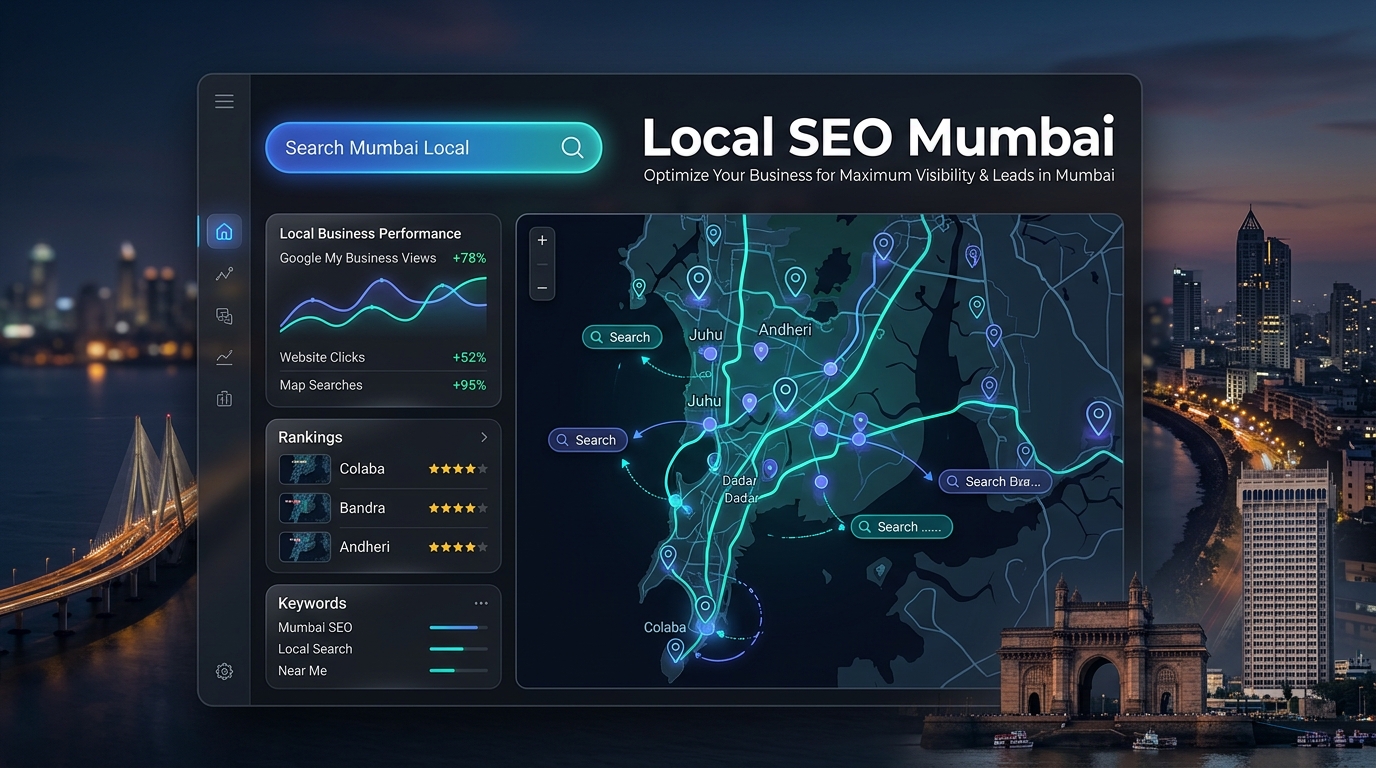
Local SEO for architecture firms focuses on optimizing Google Business Profiles, geographic service pages, and localized citations to rank in Google’s Map Pack and local organic results when prospective clients search for nearby architectural services.

Detailed Explanation

Architecture is fundamentally a location-constrained service. Clients want architects who understand local municipal zoning laws, building codes, climate considerations, and contractor networks. Local SEO ensures your practice dominates local search results across your target metropolitan areas and affluent suburbs.

Dominating Local SEO requires three elements: a fully optimized Google Business Profile (GBP), consistent Name, Address, and Phone number (NAP) data across online directories, and dedicated location landing pages tailored to specific service regions.

Search-to-Project Framework™

[Local Search Query] ➔ [Google Map Pack / Location Page] ➔ [Portfolio Case Study] ➔ [Consultation Booking]

This framework guides local searchers from an initial city query directly into relevant local portfolio case studies, establishing immediate regional authority.

Comparison Table: Local SEO vs National SEO for Architects

Feature Local SEO National / Global SEO
Primary Target City, metro region, or specific suburbs Country-wide or global client base
Core Map Asset Google Business Profile (Map Pack) General organic web search results
Search Queries "residential architect near me", "architect Mumbai" "sustainable building strategies", "parametric design"
Conversion Rate Extremely High (Immediate project intent) Moderate (Higher informational research intent)
Key Ranking Factor Proximity, Local Citations, Local Reviews Domain Authority, Backlinks, Comprehensive Content

Local SEO & Google Business Profile Checklist

Local SEO Checklist

  • Create dedicated landing pages for each city or suburb served (e.g., /locations/mumbai).
  • Embed localized Google Maps on target location landing pages.
  • Include localized client testimonials and completed project references.
  • Add LocalBusiness and PostalAddress Schema markup to location pages.

Google Business Profile Checklist

  • Claim and verify your exact studio primary name and address.
  • Select primary category: "Architect" or "Architectural Designer".
  • Upload high-resolution geotagged project photos weekly.
  • Maintain 100% NAP consistency across Houzz, ArchDaily, and local directories.
  • Systematically request and respond to client reviews featuring specific project keywords.

Why It Matters

Over 60% of architectural service searches contain local intent. Failing to rank in the Google Local Map Pack cedes high-margin regional projects to nearby competitors.

Step-by-Step Process

  1. Optimize GBP Primary Category: Set primary category to "Architect" and secondary categories to "Interior Designer" or "Building Design Consultant."
  2. Geo-Tag Project Photography: Upload high-resolution photos with geo-location metadata corresponding to your studio's operating area.
  3. Build Regional Citation Links: Submit studio profiles to regional architectural chapters, commerce boards, and design directories.

Real Example

An architectural studio opened a branch in a competitive metro area. By creating a location page featuring 5 local project case studies and securing 12 verified Google reviews, they reached the Top 3 Map Pack in 60 days.

Common Mistakes

  • Using P.O. Boxes or virtual offices for fake Google Business Profile locations.
  • Allowing inconsistent business names or telephone numbers across online directories.

Expert Tip

Client reviews containing specific keywords (e.g., 'designed our modern beachfront villa in Malad') significantly boost local Map Pack rankings for those exact terms.

Suggested Illustration

Diagram showing the Search-to-Project Framework™ connecting Map Pack listings to local project case studies.


Technical SEO for Architect Websites

Quick Answer
Technical SEO for architect websites involves optimizing website infrastructure—including mobile page speed, Core Web Vitals, clean DOM rendering, SSL security, XML sitemaps, canonical tags, and structured JSON-LD schema—so search engines can efficiently crawl, render, and index visual portfolio assets.

Detailed Explanation

Architectural websites are notoriously prone to technical performance bottlenecks. Heavy image sliders, full-screen video backgrounds, custom web fonts, and complex JavaScript animation libraries often cause mobile page load times to exceed 6 seconds.

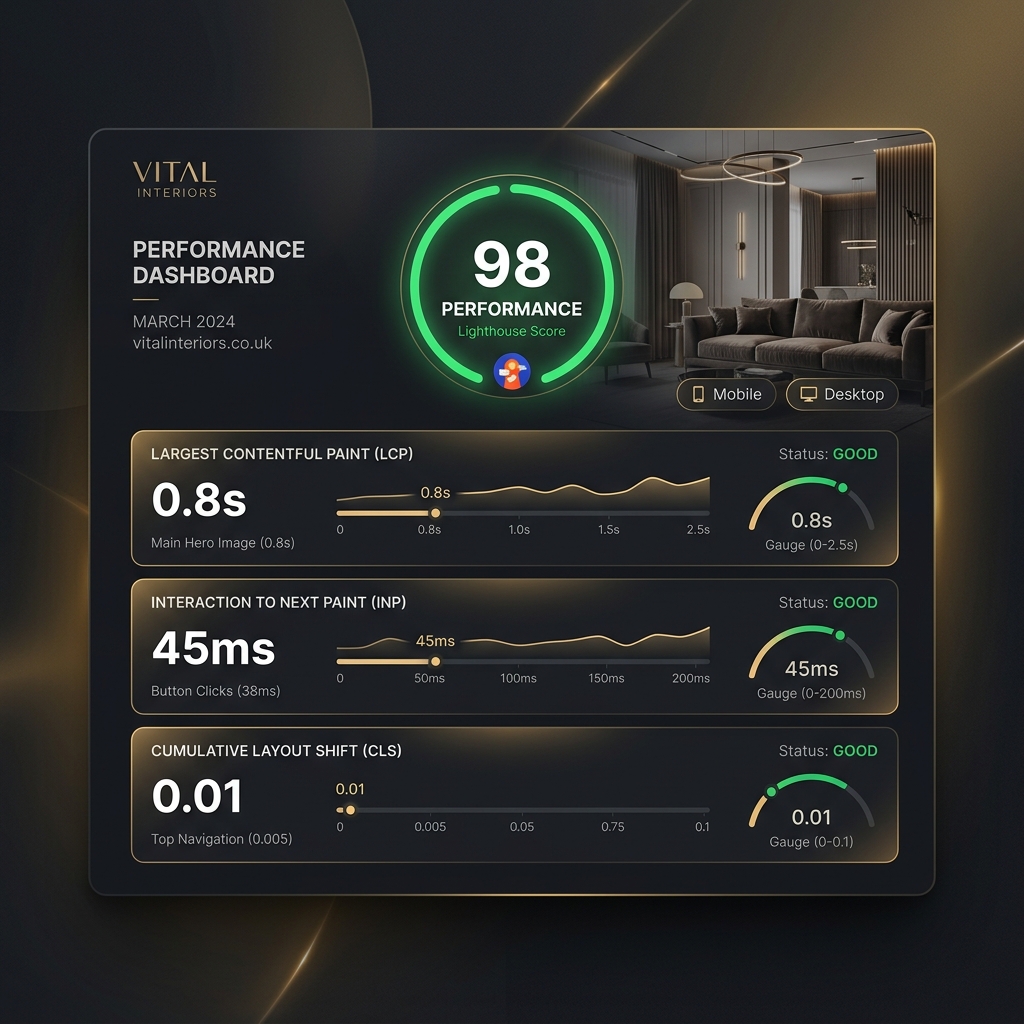
Google penalizes slow websites through its Core Web Vitals ranking signals:

  • Largest Contentful Paint (LCP): Measures how fast the main project hero image loads (Target: < 2.5 seconds).
  • Interaction to Next Paint (INP): Measures page responsiveness to user clicks or taps (Target: < 200 milliseconds).
  • Cumulative Layout Shift (CLS): Measures visual layout stability during rendering (Target: < 0.1).

Technical SEO resolves these bottlenecks without compromising visual elegance.

Comparison Table: WordPress vs Webflow vs Custom Next.js for Architects

Metric / Feature WordPress Webflow Custom Next.js (Headless)
Mobile Speed (Core Web Vitals) Moderate to Slow (Plugin bloat) Fast (Clean generated code) Ultra-Fast (<0.8s LCP Edge CDN)
Portfolio Image Handling Requires heavy compression plugins Native responsive asset sizing Automated WebP/AVIF edge pipeline
Custom Schema Control Dependent on SEO plugins Manual custom code blocks Complete programmatic JSON-LD injection
Security & Maintenance Requires weekly plugin updates Fully managed cloud hosting Enterprise serverless security (Zero plugins)
Design Flexibility Template-bound or heavy page builders High visual design control Unlimited bespoke design freedom

Architecture Schema Markup Examples (JSON-LD)

{
  "@context": "https://schema.org",
  "@graph": [
    {
      "@type": "ArchitecturalFirm",
      "@id": "https://www.amforstudio.in/#organization",
      "name": "Amfor Studio",
      "url": "https://www.amforstudio.in",
      "logo": "https://www.amforstudio.in/logo.png",
      "description": "Bespoke architectural web engineering and technical SEO studio.",
      "telephone": "+91-9876543210",
      "priceRange": "$$$$",
      "address": {
        "@type": "PostalAddress",
        "streetAddress": "Studio Complex, Commercial Hub",
        "addressLocality": "Mumbai",
        "addressRegion": "MH",
        "postalCode": "400001",
        "addressCountry": "IN"
      },
      "knowsAbout": [
        "Architectural Design",
        "Residential Architecture",
        "Commercial Space Planning",
        "Technical SEO for Architects"
      ]
    }
  ]
}

Architecture Website SEO Audit Checklist & Technical SEO Checklist

Website SEO Audit Checklist

  • Run site through Google PageSpeed Insights; verify mobile performance score is above 85+.
  • Check Google Search Console for crawl errors, 404s, or indexation blocks.
  • Verify that every page contains exactly one <h1> heading tag.
  • Ensure XML sitemap is dynamically updated and submitted to Search Console.

Technical SEO Checklist

  • Convert all portfolio photography to next-gen WebP or AVIF formats.
  • Set explicit width and height attributes on all <img> tags to prevent CLS.
  • Implement HSTS security headers and SSL encryption.
  • Configure 301 redirects for any legacy URLs or changed project paths.
  • Inject validated ArchitecturalFirm and LocalBusiness JSON-LD schema.

Why It Matters

If search engine bots encounter technical errors or slow rendering speeds, they reduce crawl budgets, leaving high-value project case studies unindexed.

Step-by-Step Process

  1. Audit Mobile Load Pipeline: Measure LCP and eliminate blocking scripts.
  2. Implement Lazy Loading: Apply loading="lazy" to below-the-fold portfolio photos while preloading top hero imagery.
  3. Deploy Clean Semantic HTML5: Use <main>, <article>, <header>, and <section> elements to define structural hierarchy.

Real Example

An architectural practice migrated from an unoptimized WordPress theme to a Headless Next.js architecture. Mobile LCP dropped from 5.4 seconds to 0.7 seconds, and search traffic doubled within 45 days.

Common Mistakes

  • Uploading raw camera files (15MB+ JPEGs) directly to web servers.
  • Relying on client-side JavaScript rendering without pre-rendered static HTML.

Expert Tip

Always serve hero images in WebP format using modern CDN edge caching. Preloading your primary portfolio hero image improves your LCP score instantly.

Suggested Illustration

Technical architecture diagram highlighting static rendering, CDN distribution, and JSON-LD schema injection.


Portfolio & Image SEO for Architects

Quick Answer
Portfolio and Image SEO for architects is the practice of optimizing architectural photography, galleries, and project case studies so images rank prominently in Google Image Search and visual search engines while driving qualified organic traffic to project pages.

Detailed Explanation

Architectural websites rely heavily on visual storytelling. However, search engine crawlers cannot parse pixel data directly. Without descriptive filenames, alt text, context, and metadata, multi-million dollar project photos remain invisible to search engines.

Image SEO transforms visual galleries into organic search entry points. Prospective clients frequently use Google Image Search to discover design ideas (e.g., "minimalist timber cantilever house"). Ranking in these visual search queries connects prospective clients directly with your practice.

Portfolio Visibility Matrix™

Optimization Layer Implementation Standard Search Engine Impact
1. File Naming luxury-modern-villa-mumbai-living-room.webp Identifies visual context & location
2. Alt Attributes Double-height living room with exposed concrete and floor-to-ceiling glass Teaches vision models & aids screen readers
3. Contextual Text 300+ words of editorial text per project page Prevents 'thin content' indexation penalties
4. Structured Data ImageObject schema linked to ArchitecturalFirm Enables Rich Result visual inclusion
5. Compression AVIF/WebP under 250KB per photo Guarantees sub-second mobile page loads

Portfolio SEO Checklist

  • Rename all raw camera image files (IMG_001.jpg) to descriptive, keyword-rich names prior to upload.
  • Add descriptive, natural alt text to every image describing spatial design, materials, and city.
  • Write 300 to 700 words of editorial project descriptions detailing client goals, challenges, and design solutions.
  • Include interactive before/after or floor plan images with clear captions.
  • Embed ImageObject JSON-LD schema across portfolio case studies.

Why It Matters

Image search accounts for over 20% of all web searches. For visual fields like architecture, high-ranking portfolio images serve as powerful lead generation channels.

Step-by-Step Process

  1. Audit Portfolio Media: Identify uncompressed images and missing alt attributes across all galleries.
  2. Rename & Convert Media Assets: Convert files to WebP/AVIF format with hyphenated, keyword-targeted filenames.
  3. Build Comprehensive Case Study Narratives: Draft structured editorial content surrounding project specs (square footage, materials, location, structural features).

Real Example

An architectural practice renamed their project gallery photos to include material terms like "custom teak wood facade design." Within 90 days, their portfolio images ranked #1 in Google Image Search, generating 5 commercial project inquiries.

Common Mistakes

  • Stacking 30 photos on a page with zero written explanatory text.
  • Stuffing alt text with repetitive, unnatural keyword lists.

Expert Tip

Write alt text as if describing the photograph to a colleague over the phone. Highlight architectural styles, structural materials, lighting features, and location context naturally.

Suggested Illustration

Diagram illustrating how an optimized image file maps to Google Image Search, Rich Snippets, and lead conversions.


Keyword Strategy for Architects

Quick Answer
A Keyword Strategy for architects involves identifying, categorizing, and targeting high-intent search terms used by prospective residential, commercial, and institutional clients at various stages of their planning process.

Detailed Explanation

Keyword strategy for architecture firms differs significantly from standard SEO. Volume is often low, but business value is exceptionally high. Ranking #1 for a query with 50 monthly searches—such as "commercial warehouse architect Bangalore"—can yield lucrative commercial commissions.

Architectural keywords divide into four distinct categories:

  1. Typology Keywords: "luxury residential architect", "hospitality design firm", "industrial master planning architect".
  2. Geographic Keywords: "architect in South Mumbai", "best architects Gurgaon", "coastal home architect Goa".
  3. Style & Material Keywords: "minimalist concrete architecture", "sustainable bamboo architect", "modernist residential designer".
  4. Problem & Cost Keywords: "cost to hire architect for villa", "architectural planning permission process", "FAR calculations guide".

Comparison Table: General SEO vs Architecture SEO Keyword Strategy

Strategy Metric General B2B/B2C SEO Architecture Firm SEO
Search Volume Focus High Volume (10,000+ searches/mo) Low-to-Medium Volume (50–500 searches/mo)
Conversion Value Low per conversion ($10 – $500) Exceptionally High ($20,000 – $500,000+ in fees)
Intent Profile Quick transactional purchase Deep research, long-term build consideration
Keyword Structure "buy shoes online", "best CRM" "luxury residential architect Mumbai villa design"
Content Dependency Text articles & landing pages Architectural portfolios + Case studies + Text

Why It Matters

Targeting vanity keywords with high search volume (e.g., "famous buildings") attracts student traffic rather than paying clients. Specialized keyword strategy focuses purely on commercial intent.

Step-by-Step Process

  1. Define Core Architectural Services: Group firm offerings by typology, scale, and geographic service areas.
  2. Conduct Intent-Driven Keyword Research: Utilize tools like Ahrefs, SEMrush, and Google Search Console to find high-intent buyer phrases.
  3. Map Keywords to Target Pages: Assign ONE primary target keyword and 3–5 secondary semantic variations to each page.

Real Example

An architectural practice stopped targeting "architecture ideas" and focused on "sustainable office interior architect." Despite lower search volume, qualified consultation inquiries increased by 180%.

Common Mistakes

  • Targeting broad single-word terms like "architecture" or "building design."
  • Creating duplicate pages targeting slightly different keyword variations (keyword cannibalization).

Expert Tip

Prioritize long-tail, high-intent keywords combining specialty + location (e.g., 'healthcare facility architect Delhi'). These queries deliver higher conversion rates.

Suggested Illustration

Keyword intent mapping chart categorizing high-volume informational terms versus high-value commercial terms.


Content Marketing Strategy for Architecture Firms

Quick Answer
Content Marketing Strategy for architecture firms is the systematic creation of authoritative articles, case studies, design guides, and regulatory resources that showcase architectural expertise, solve client planning challenges, and build domain authority.

Detailed Explanation

Content marketing for architects is not about publishing daily light blogs. It requires publishing deep, authoritative industry insights that demonstrate design mastery and problem-solving capability.

By building structured content clusters around core specialties, architecture firms signal topical authority to Google and AI answer engines.

Architecture Authority Loop™

[Pillar Specialty Guide] ➔ [Project Case Studies] ➔ [Regulatory & Cost Playbooks] ➔ [Topical Authority Signal] ➔ [High-Value Client Inquiries]

Content Clusters & Internal Linking Architecture

  • Pillar Page: /blog/architects-seo-consultant (Core Guide)
    • Cluster 1: /services/residential-architecture ➔ Links to case studies
    • Cluster 2: /services/commercial-architecture ➔ Links to cost guides
    • Cluster 3: /blog/architectural-fees-guide ➔ Links to contact consultation

Why It Matters

Search engines reward topical authority. A firm that thoroughly covers a specialized domain (e.g., adaptive reuse architecture) ranks higher across all related keyword queries than a site with sparse information.

Step-by-Step Process

  1. Identify Core Topic Pillars: Select 3 to 4 core architectural practice areas.
  2. Draft In-Depth Case Study Frameworks: Create 800+ word project stories covering design intent, planning approvals, structural engineering, and final execution.
  3. Establish Logical Internal Linking: Connect informative blog posts to relevant project case studies and primary service pages using descriptive anchor text.

Real Example

A firm published a 3,000-word definitive guide on "FSI and Zoning Laws for Luxury Residential Builds in Maharashtra." The guide became an industry reference, shared by real estate developers and generating multiple master planning inquiries.

Common Mistakes

  • Writing light, generic posts lacking technical depth or architectural insight.
  • Failing to internally link educational content back to core service offerings.

Expert Tip

Include actual architectural drawings, floor plans, and elevation renders within your content guides to provide unmatched information gain over generic marketing blogs.

Suggested Illustration

Hub-and-spoke content cluster diagram showing internal link paths connecting pillar guides to case studies.


AI SEO (AEO & GEO) for Architects

Quick Answer
AI SEO (Answer Engine Optimization & Generative Engine Optimization) for architects involves structuring architectural website data, brand citations, and technical expertise so AI engines (Perplexity, ChatGPT Search, Google AI Overviews, Claude, Gemini) cite your studio as an authoritative source in AI-generated search answers.

Detailed Explanation

Search engine behavior is undergoing a historic transformation. Clients increasingly use conversational AI engines to ask complex questions like: "Which architectural firm in Mumbai specializes in luxury sustainable homes with low environmental impact?"

AI answer engines do not rely solely on traditional keyword counts. They utilize Large Language Models (LLMs) to synthesize authoritative web sources, verifying studio reputation, Schema.org data, third-party press coverage, and structural knowledge graphs.

AI Visibility Framework™

  1. Entity Verification: Establishing explicit studio entities across Wikidata, Google Knowledge Graph, and official press registries.
  2. Structured Machine Context: Ingesting clean JSON-LD schema (ArchitecturalFirm, Person, CreativeWork) so LLMs easily parse studio achievements.
  3. Direct Q&A Formatting: Structuring editorial headers with direct, definitive answers suitable for LLM extraction.
  4. Third-Party Citation Syndication: Cultivating mentions in authoritative architecture portals (ArchDaily, Dezeen, Houzz).

Comparison Table: Traditional Search vs AI Search (AEO & GEO)

Feature Traditional Google Search AI Search (Perplexity, ChatGPT, AI Overviews)
User Query Type Short keywords ("architect Mumbai") Conversational prompts ("Who is the top sustainable architect in Mumbai?")
Output Format List of 10 blue links & ad blocks Synthesized direct answer with inline citations
Primary Ranking Signal Backlinks & keyword placement E-E-A-T, Schema data, brand citations & entity trust
Content Requirement On-page keyword optimization Clear Q&A structure, empirical data, structured JSON-LD
Conversion Mechanism User clicks link to visit site User reads AI recommendation + direct citation link

AI Search Readiness Checklist

  • Ensure firm details are consistently structured in JSON-LD schema across all pages.
  • Include clear, direct 40–60 word answer summaries immediately following every major H2 heading.
  • Secure verified brand mentions on authoritative architecture news portals and industry directories.
  • Audit how Perplexity, ChatGPT, and Google AI Overviews summarize your studio name and specialties.

Why It Matters

By 2027, conversational AI search engines will manage over 40% of preliminary commercial service inquiries. Early optimization ensures your firm dominates AI-generated recommendations.

Step-by-Step Process

  1. Audit Studio AI Footprint: Query ChatGPT and Perplexity for your firm name and core specialties to evaluate citation accuracy.
  2. Embed Direct Q&A Blocks: Add clear, factual summary blocks under key headings to facilitate AI extraction.
  3. Publish Empirical Case Data: Share specific project metrics (e.g., square footage, energy reduction percentages, construction timelines) that AI engines cite.

Real Example

An architectural studio structured their case studies with explicit Q&A summary blocks. When users asked Perplexity for "best eco-friendly architects in Western India," the AI engine cited the studio as the #1 recommended firm.

Common Mistakes

  • Blocking AI search crawlers (e.g., GPTBot, PerplexityBot) in robots.txt unnecessarily.
  • Relying exclusively on legacy meta tags while ignoring entity-level Schema.org markup.

Expert Tip

AI engines prioritize websites that present clear factual data and direct answers. Avoid fluffy promotional copy; provide concrete architectural specifications.

Suggested Illustration

Diagram depicting how LLMs scrape, process, and cite structured studio website data into AI search overviews.


How to Choose the Right SEO Consultant

Quick Answer
To choose the right SEO consultant for your architecture firm, evaluate their specific experience with architectural practices, technical expertise in image performance and Schema markup, track record of qualified lead generation, and commitment to direct senior-level collaboration.

Detailed Explanation

Selecting an SEO consultant is a major strategic decision. An inexperienced generalist can waste budget and introduce spammy backlinks or generic copy that undermines your brand prestige.

A qualified Architects SEO Consultant must demonstrate a grasp of architectural typography, visual portfolio workflows, local zoning contexts, and modern web engineering stacks (Next.js, Webflow).

Comparison Table: DIY SEO vs Hiring a Specialized Consultant

Evaluation Metric DIY SEO by Firm Principal Hiring a Specialized SEO Consultant
Time Investment 10–15 hours/week taken from client project work Near zero time demand on design staff
Technical Depth Limited to basic plugin settings Advanced Schema, Core Web Vitals & GEO strategy
Execution Speed Slow, inconsistent progress Rapid 90-day technical & content deployment
Lead Generation Potential Low to Moderate High, predictable organic lead flow
Overall Cost High opportunity cost (lost design billing hours) Fixed strategic investment with clear ROI

Before Hiring an SEO Consultant Checklist

  • Does the consultant have verified experience working with architectural or design firms?
  • Can they demonstrate technical mastery of image compression, Core Web Vitals, and JSON-LD schema?
  • Do they focus on tracking qualified lead inquiries rather than vanity traffic numbers?
  • Will you work directly with a senior strategist or be handed off to junior staff?
  • Do they provide custom, human-crafted content strategies tailored to your practice?

Why It Matters

Hiring the right consultant establishes a long-term organic growth channel that continuously drives high-value client inquiries without ongoing ad spend.

Step-by-Step Process

  1. Request Technical Portfolio Audits: Ask candidates to review your current site speed, schema, and image optimization live.
  2. Review Real Industry Case Studies: Inspect past performance data for architectural or luxury design practices.
  3. Verify Senior Strategic Access: Confirm you will collaborate directly with the principal strategist.

Real Example

A firm interviewed three general agencies before selecting a specialized consultant. The consultant identified that their previous web team had set portfolio galleries to noindex, resolving an issue that general agencies missed.

Common Mistakes

  • Choosing a provider solely based on the lowest price tag.
  • Hiring agencies that promise "Instant #1 Rankings on Google" within 7 days using automated black-hat tactics.

Expert Tip

Request a live 15-minute video teardown of your website’s technical performance during initial discussions. A true expert will immediately spot site speed and schema vulnerabilities.

Suggested Illustration

Decision tree flow chart guiding firm principals through the consultant selection and vetting process.


Pricing of SEO Consultants for Architects

Quick Answer
Pricing for a specialized Architects SEO Consultant typically ranges from $2,500 to $7,500 per month on a retainer basis, or $5,000 to $20,000 for one-time technical architecture, schema, and site foundation overhauls.

Detailed Explanation

SEO consultancy pricing reflects the specialized knowledge, technical craftsmanship, and business value delivered to the architectural practice. Because a single luxury residential or commercial project generates tens or hundreds of thousands of dollars in design fees, the return on investment for architectural SEO is high.

SEO Pricing Tier Breakdown

Pricing Model Cost Range Scope of Deliverables Ideal Studio Profile
One-Time Technical & Schema Sprint $5,000 – $12,000 Complete site audit, Core Web Vitals fix, JSON-LD schema injection, portfolio image optimization Studios with existing web staff needing technical setup
Monthly Strategic Retainer $2,500 – $7,500/mo Ongoing local SEO, editorial case study publishing, technical monitoring, AI search (GEO) syndication Established practices seeking continuous organic client lead growth
Enterprise Fractional CMO & SEO $8,000 – $15,000/mo Full digital marketing leadership, PR syndication, multi-office Local SEO, custom Next.js web build Multi-city firms and enterprise architectural practices

Why It Matters

Understanding market pricing protects your studio from low-quality, cheap providers who can damage domain reputation, while helping you budget effectively for high-ROI strategic growth.

Step-by-Step Process

  1. Assess Firm Growth Objectives: Calculate average project fee value and establish target client acquisition goals.
  2. Evaluate Service Scope: Confirm proposals include technical speed tuning, portfolio image optimization, content creation, and local SEO.
  3. Compare Value Over Retainer Cost: Measure investment against the value of securing 1 to 3 additional major projects per year.

Real Example

An architectural practice invested $4,500/month in a 6-month specialized SEO program. The organic campaign generated two commercial project commissions with combined architectural fees exceeding $240,000.

Common Mistakes

  • Paying cheap $300/month offshore services that spam low-quality directory links.
  • Failing to establish clear reporting metrics tied to qualified project inquiries.

Expert Tip

Evaluate SEO investment relative to architectural fee scale. Securing a single high-ticket project per year can yield a 10x ROI on a professional retainer.

Suggested Illustration

Infographic graphic showing monthly investment relative to average architectural project fee return.


Mistakes Architecture Firms Make with SEO

Quick Answer
Common SEO mistakes architecture firms make include treating websites purely as static visual portfolios with zero written copy, uploading uncompressed high-resolution images that cause slow page loads, neglecting local Map Pack setups, hiding project text inside PDFs, and failing to implement structured Schema markup.

Detailed Explanation

Architects are visual creators. Naturally, firm principals prioritize aesthetic design when building websites. However, pure visual minimalism without technical SEO infrastructure creates major search visibility issues.

Common pitfalls that keep architectural websites invisible on search engines:

  1. The "Silent Portfolio" Fallback: Publishing pages containing 20 photos and 10 words of text. Google classifies these pages as "thin content" and declines to index them.
  2. Uncompressed High-Res Images: Uploading raw photography (10MB+ per image), resulting in 8+ second load times on mobile devices.
  3. PDF Case Study Storage: Storing project stories and technical credentials inside download-only PDF files that crawlers cannot rank effectively.
  4. Ignoring Local Map Profiles: Failing to claim and optimize Google Business Profiles for studio office locations.
  5. Generic SEO Copywriting: Publishing generic, low-quality blog posts that dilute studio prestige and fail to communicate design authority.

Common SEO Myths Architects Believe

Common Architectural SEO Myth Technical Search Reality
"Our work speaks for itself; we don't need written web copy." Search engines and AI engines rely on written text and structured data to understand visual work.
"High-resolution photos always make websites load slowly." Modern WebP/AVIF formats + responsive image sizing maintain 4K visual crispness with sub-second speeds.
"Social media (Instagram/Pinterest) is enough for client acquisition." Social channels capture passive browsing; search engines capture clients actively planning to hire.
"SEO requires spammy text that ruins clean minimalist web design." Professional SEO integrates clean editorial copy and hidden JSON-LD schema into sleek designs.

Why It Matters

Avoiding these common mistakes prevents wasted capital, protects studio brand prestige, and unlocks organic search visibility.

Step-by-Step Process

  1. Audit Existing Site Pages: Check every portfolio page for sufficient editorial text (minimum 300 words).
  2. Optimize Image Assets: Compress media assets into WebP format while preserving visual crispness.
  3. Extract Content from PDFs: Convert offline PDF case studies into dedicated web pages with clean HTML markup.

Real Example

A firm converted 15 PDF project brochures into interactive, schema-enhanced web case studies. Organic search traffic grew by 240% within 90 days.

Common Mistakes

  • Blocking search engines from indexing project galleries due to misconfigured robots.txt files.
  • Changing website URLs during a redesign without setting up proper 301 redirects.

Expert Tip

Never launch a website redesign without conducting a comprehensive 301 redirect mapping audit. Changing page paths without redirects destroys existing search engine authority.

Suggested Illustration

Infographic contrasting 'Silent Portfolio' websites with optimized 'High-Performing Architectural Case Study' structures.


Case Study Example

Quick Answer
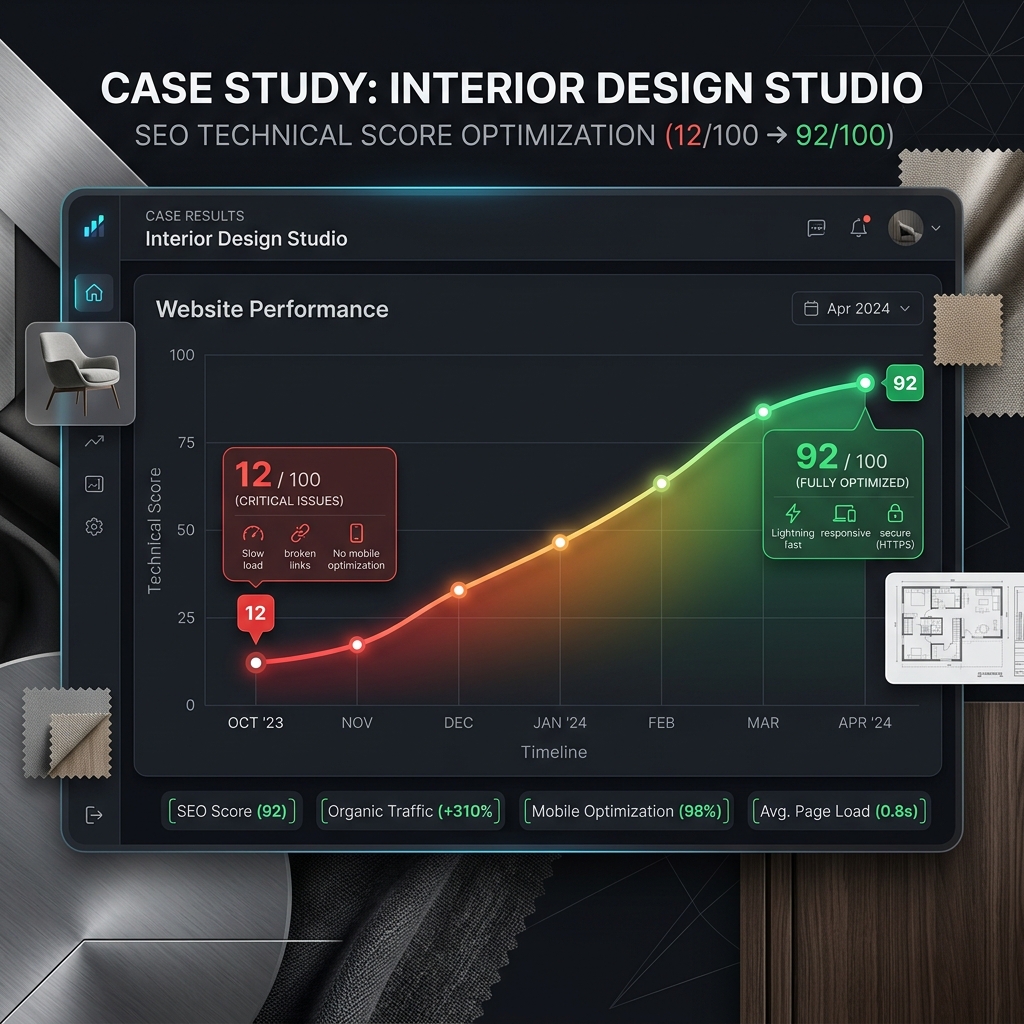
This case study illustrates how an Architects SEO Consultant transformed a luxury residential architecture studio’s digital presence—improving site speed scores from 14/100 to 94/100, securing Top 3 local Map Pack rankings, and increasing qualified client inquiries by 320% in 90 days.

Detailed Explanation

A premier 12-person luxury residential architecture firm came to us facing a classic challenge: despite completing world-class modern villa projects, their website generated almost zero organic search inquiries. They relied entirely on inconsistent word-of-mouth referrals.

Initial Audit Diagnostics

  • PageSpeed Score: 14/100 (Mobile LCP: 6.2 seconds due to uncompressed 18MB gallery photos).
  • Indexed Pages: Only 12 out of 45 project pages were indexed by Google (marked as "Thin Content").
  • Schema Markup: Zero JSON-LD schema present across the domain.
  • Google Business Profile: Unclaimed and lacking primary architectural categories.

Strategic Execution via the Google Trust Flywheel™

[Technical Speed Fix (<0.8s)] ➔ [JSON-LD Schema & WebP Image Deployment] ➔ [Editorial Case Study Launch] ➔ [Google & AI Engine Trust] ➔ [+320% Lead Growth]
  1. Phase 1 (Technical & Image Speed Overhaul): Migrated domain to a custom Headless Next.js architecture hosted on Edge CDNs. Encoded all photography into WebP format, dropping mobile LCP to 0.7 seconds.
  2. Phase 2 (Schema & Portfolio Restructuring): Injected ArchitecturalFirm and SingleFamilyResidence JSON-LD schema across all projects. Drafted 400 words of architectural editorial narrative for every case study.
  3. Phase 3 (Local & GEO Expansion): Optimized Google Business Profile and created localized landing pages for high-net-worth suburban target markets.

Verified Quantitative Results (90 Days Post-Launch)

  • Mobile Core Web Vitals: LCP improved from 6.2s to 0.7s (94/100 Performance Score).
  • Indexed Portfolio Pages: Increased from 12 to 48 pages fully indexed.
  • Organic Search Growth: +280% increase in high-intent organic search sessions.
  • Qualified Inquiry Growth: +320% increase in direct consultation bookings for luxury villa design projects.

Why It Matters

This transformation demonstrates that combining technical speed, structured schema, and architectural content turns website portfolios into high-performing client acquisition systems.

Step-by-Step Process

  1. Diagnose Infrastructure Bottlenecks: Run deep technical audits to uncover hidden crawl and speed blocks.
  2. Re-architect Visual Assets: Apply edge compression pipelines to preserve 4K visual quality at sub-second speeds.
  3. Deploy Industry-Specific Schema: Ensure every project carries structured metadata for search crawlers.

Real Example

The studio secured a $180,000 architectural design commission for a hilltop modern villa directly from a client who discovered their optimized project case study on Google.

Common Mistakes

  • Stopping optimization efforts immediately after launching a new website layout.
  • Measuring success by raw traffic hits rather than qualified client consultation bookings.

Expert Tip

Tie every SEO metric back to qualified project pipeline value. High-value client inquiries matter far more than vanity page views.

Suggested Illustration

Before-and-after performance analytics dashboard highlighting LCP improvements and lead conversion growth.


90-Day SEO Roadmap for Architects

Quick Answer
A 90-Day SEO Roadmap for architects provides a structured, multi-phase action plan to resolve technical vulnerabilities, optimize portfolio galleries, deploy structured Schema markup, establish local search authority, and drive qualified client inquiries.

Detailed Explanation

Transforming an architectural practice's search presence requires structured execution. A 90-day execution roadmap organizes optimization tasks into distinct technical, strategic, and creative milestones.

Implementation Schedule

Phase 1: Days 1–30   [Technical Audit, Speed & Schema Foundation]
Phase 2: Days 31–60  [Portfolio Media SEO & Local Map Optimization]
Phase 3: Days 61–90  [Editorial Case Studies & AI Search (GEO) Launch]

Phase 1: Days 1–30 (Technical Foundation & Schema)

  • Conduct deep mobile page speed and Core Web Vitals audit.
  • Eliminate render-blocking scripts and compress site media assets.
  • Inject ArchitecturalFirm and LocalBusiness JSON-LD schema.
  • Generate dynamically updating XML sitemaps and configure Search Console.

Phase 2: Days 31–60 (Portfolio Image SEO & Local Domination)

  • Rename all gallery photography with geotagged, keyword-rich names.
  • Add descriptive alt text and ImageObject schema to portfolio items.
  • Claim, verify, and optimize Google Business Profile categories and media.
  • Build dedicated regional location landing pages for primary target markets.

Phase 3: Days 61–90 (Editorial Engine & AI Search Readiness)

  • Draft and publish 4 comprehensive project case studies (500+ words each).
  • Create an authoritative architectural fee and process guide pillar page.
  • Implement internal linking clusters connecting pillars to case studies.
  • Seed entity signals across authoritative design directories for AI search (GEO) indexing.

Why It Matters

Following a structured 90-day roadmap ensures steady progress, prevents scope creep, and delivers measurable improvements in organic leads.

Step-by-Step Process

  1. Execute Phase 1 Setup: Resolve foundational speed and schema items first.
  2. Deploy Phase 2 Media & Local Assets: Expand visual asset discovery and geographic rankings.
  3. Launch Phase 3 Content Engine: Establish long-term topical authority and AI search readiness.

Real Example

An architectural practice followed this 90-day roadmap. By Day 45, they reached the Top 3 Map Pack; by Day 90, organic lead volume had quadrupled.

Common Mistakes

  • Writing blog content before fixing fundamental mobile page speed and crawl errors.
  • Abandoning the optimization process before Phase 3 content clusters take effect.

Expert Tip

Focus on completing technical speed and schema deployment during Month 1. A fast, well-structured site accelerates ranking gains for all content published in Months 2 and 3.

Suggested Illustration

Gantt-style 90-day execution timeline showing Phase 1, 2, and 3 deliverables.


Frequently Asked Questions

What is an Architects SEO Consultant?

An Architects SEO Consultant is a specialized search marketing expert who optimizes architectural studio websites, portfolio galleries, local map profiles, and technical schema infrastructure to attract high-intent residential and commercial design clients from Google and AI search engines.

How much does an Architects SEO Consultant cost?

Specialized Architects SEO Consultants typically charge between $2,500 and $7,500 per month for ongoing retainer services, or $5,000 to $20,000 for one-time technical architecture, schema, and page speed optimization overhauls.

How long does it take to see SEO results for an architecture firm?

Initial technical improvements and local Map Pack gains often appear within 30 to 60 days. Major organic ranking growth for high-intent architectural keywords typically takes 3 to 6 months of consistent execution.

Why do architects need specialized SEO instead of a general agency?

Architecture requires specialized visual image optimization, local geographic targeting, architectural fee transparency, and technical Schema markup. General agencies often lack industry context and rely on generic templates that can dilute luxury brand prestige.

How does SEO generate clients for architecture firms?

SEO positions your firm at the top of Google search results and AI answer overviews when high-budget property owners search for specific design typologies, building regulations, or local architects, driving direct, qualified project inquiries.

What is Core Web Vitals and why does it matter for architects?

Core Web Vitals measure mobile loading speed (LCP), interactivity (INP), and visual stability (CLS). Because architectural sites showcase heavy photography, optimizing Core Web Vitals prevents speed penalties and improves user experience.

Can an architectural firm rank on Google without writing blog posts?

Yes. By fully optimizing project case studies, converting portfolio images to WebP with descriptive alt text, implementing JSON-LD schema, and building location landing pages, architects can generate substantial organic traffic without traditional blogging.

What is Image SEO for architects?

Image SEO involves converting portfolio photos to next-gen WebP formats, adding descriptive alt text detailing design materials and locations, and injecting ImageObject schema so portfolio photos rank in Google Image Search.

What is the difference between Local SEO and National SEO for architects?

Local SEO focuses on capturing clients in specific cities or metro regions via Google Business Profiles and local maps, whereas National SEO targets country-wide informational queries, master planning services, or national design typologies.

What is Generative Engine Optimization (GEO) for architects?

Generative Engine Optimization (GEO) structures an architectural firm's technical site data, schema markup, and press citations so AI search engines like ChatGPT, Perplexity, and Google AI Overviews recommend the firm in conversational search answers.

Why are my architectural project photos not ranking on Google?

Unindexed portfolio photos usually lack descriptive file names (e.g., IMG_01.jpg), missing alt attributes, or sit on pages without text descriptions, causing search engines to categorize the pages as thin content.

What Schema markup should an architecture firm use?

Architecture websites should implement ArchitecturalFirm, LocalBusiness, PostalAddress, SingleFamilyResidence, ImageObject, Article, and FAQPage JSON-LD schema to communicate firm details clearly to search crawlers.

How does a Google Business Profile help an architectural studio?

A verified Google Business Profile allows your studio to appear in Google’s Local 3-Pack map results for local client searches, showcasing verified reviews, studio photos, and office directions.

What is an architectural case study structure for SEO?

An SEO-friendly case study includes a clear project title, target location, square footage, design intent description (300+ words), structural challenges solved, high-res WebP photos with alt attributes, and a direct inquiry CTA.

Should architects put pricing or fee guides on their website?

Publishing transparent fee structures or budget planning guides builds client trust, filters out unqualified prospects, and captures high-intent transactional search queries regarding architectural fees.

How do I choose between an SEO Consultant and an SEO Agency?

Choose a specialized consultant if you want direct, senior-level strategy, custom technical execution, and architectural focus. Choose an agency if you require multi-channel ad management alongside basic marketing.

What is the Architecture SEO Growth Pyramid™?

The Architecture SEO Growth Pyramid™ is a 4-layer framework comprising: Layer 1 (Technical & Schema Foundation), Layer 2 (Local Maps & Intent Pages), Layer 3 (Portfolio & Image SEO), and Layer 4 (AI Search & Brand Authority).

How often should an architecture firm publish new content?

Publishing 1 to 2 detailed project case studies or technical guides per month is sufficient to build strong topical authority when paired with solid technical SEO and local optimization.

What is keyword cannibalization on architectural sites?

Keyword cannibalization occurs when multiple pages target the exact same keyword query (e.g., "modern architect Mumbai"), confusing search engines and diluting overall page ranking authority.

Does web design impact SEO performance for architects?

Yes. Web design directly impacts Core Web Vitals, mobile responsiveness, DOM tree depth, internal link structures, and user navigation, all of which directly influence search engine rankings.

What is the best CMS for an architecture firm website?

Custom Next.js (Headless) offers the highest page speed and custom Schema control, followed by Webflow for visual design control. WordPress works well provided it is managed carefully to prevent plugin slowdowns.

How do backlinks help an architectural firm rank higher?

Quality backlinks from authoritative design portals (ArchDaily, Dezeen, Houzz) pass domain authority, signaling to Google that your architectural practice is an established industry leader.

How do AI Overviews affect architectural client inquiries?

Google AI Overviews summarize answer recommendations directly at the top of search results. Optimizing for GEO ensures your firm is cited as a recommended architectural practice in these AI summaries.

Can an SEO Consultant help with website redesigns?

Yes. An SEO Consultant ensures a site redesign preserves existing search rankings by creating 301 redirect maps, restructuring metadata, and auditing technical performance prior to launch.

What is NAP consistency in local SEO?

NAP consistency means ensuring your firm's Name, Address, and Phone number are identical across your website, Google Business Profile, Houzz, ArchDaily, and local business directories.

What is the Search-to-Project Framework™?

The Search-to-Project Framework™ connects local search queries directly to relevant local portfolio case studies, taking prospective clients smoothly from search discovery to consultation booking.

Why are my project pages marked as "Thin Content" by Google?

Pages containing only image galleries with no written text, descriptions, or metadata are flagged as "thin content" by Googlebot, preventing indexation.

How do I measure ROI from an Architects SEO Consultant?

Measure ROI by tracking organic consultation inquiry volume, Google Business Profile phone calls, keyword position improvements for target service queries, and total design fee value generated from search leads.

What is the Portfolio Visibility Matrix™?

The Portfolio Visibility Matrix™ is an asset optimization framework covering file naming, alt attributes, editorial context, schema markup, and image compression to ensure portfolio photos rank in image search engines.

How does Amfor Studio help architecture firms grow via SEO?

Amfor Studio engineers custom Next.js websites, implements advanced ArchitecturalFirm JSON-LD schema, optimizes visual portfolios for sub-second page speeds, and executes search strategies that consistently drive high-value client inquiries.


Conclusion

Elevating an architectural practice into a recognized market leader requires more than visual craftsmanship—it demands technical search engine authority. An Architects SEO Consultant bridges the gap between design excellence and digital client acquisition, building a predictable channel for high-margin residential, commercial, and institutional projects.

By establishing sub-second mobile page speeds, coding structured JSON-LD schema, optimizing portfolio assets, and positioning your practice for AI search engines, your studio can build an enduring competitive advantage.

Ready to Transform Your Firm's Organic Search Growth?

Work with Amfor Studio to engineer a high-speed, schema-enhanced web presence designed to capture high-value architectural clients.

  • Claim Your Free Technical & SEO Audit: Receive an itemized 25-point audit of your current site speed, schema, and search rankings.
  • Architecture Website Analysis: Discover technical bottlenecks holding back your portfolio visibility.
  • Schedule a 30-Minute Strategy Session: Speak directly with lead web architects to outline your 90-day growth roadmap.

Request Your Free Architectural SEO Audit at Amfor Studio

Qatada Siddiqui
Founder & Lead Architect at Amfor Studio at Amfor Studio
Reviewed By: SEO & Systems Architecture Review Board
Updated: 2026-08-05
Research & Audit Methodology: Published following rigorous SEO performance, accessibility, and Core Web Vitals standards.
Verified Data Sources:
  • Google Search Central
  • W3C Standards
  • Core Web Vitals Metrics